
Surveys & Data Collection
Comprehensive surveys across health, education, economic conditions, and social welfare — giving us the data to tailor programs to specific community needs rather than generic assumptions.
Social Impact · Programs
Six areas of active work — each addressing a different layer of what holds communities back.
Program 01
Democratic Institutions & Public Participation
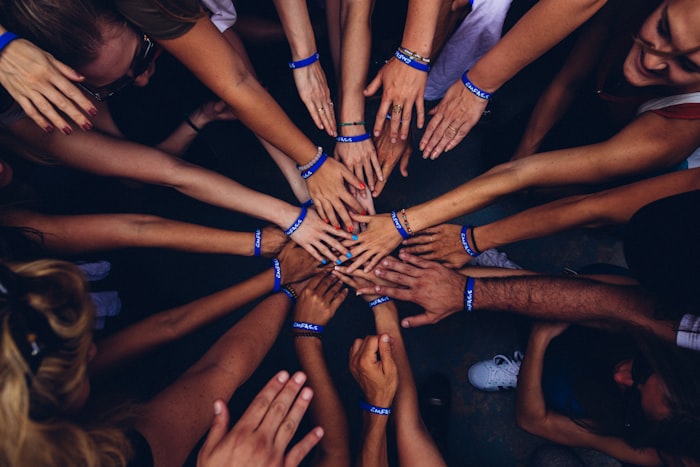
Social mobilization is the core of how we work with rural communities. By bringing men and women together to form groups and actively participate in managing local development, we enable communities to identify their own needs and find the resources to address them — whether through their own savings, labor, or external funding.
Our mandate: striving for poverty alleviation through empowerment and community mobilization. We invest in repetitive training programs and capacity building so communities can tackle challenges themselves and sustain progress long after our direct involvement ends.

Program 02
Fundamental Freedoms & Civic Protections
Pakistan has faced significant challenges in upholding human and democratic rights — compounded by periods of military governance and ongoing conflict. We intervene in cases and campaigns addressing extrajudicial action, judicial independence, violence against women, religious freedom, labor rights, and protections for children and persons with disabilities.
Our focus is not to replace institutions but to hold them to the standards they exist to uphold.
Program 03
Policy Advocacy
We believe that existing policies and laws must be examined for gaps before they can serve marginalized communities effectively. Once those gaps are identified, we design and implement advocacy campaigns to close them.
Our current focus areas: equitable access to clean water, forest rights for local communities, women's rights including rural women and girls' primary education, and rights of differently-abled individuals across Pakistan.
Program 04
Community Resilience
Food and energy security are critical issues affecting every community we work with. We promote sustainable practices at the grassroots level — enhancing capacities in agriculture, livestock management, forestry, water and soil conservation, and alternative energy.
We also work with remote rural communities to create alternative income sources through village-based entrepreneurship — promoting traditional skills alongside modern capabilities including digital literacy, e-commerce, agri-tech, and renewable energy installation. The goal is to allow skilled workers to remain in their communities, grow their businesses, and become self-reliant.

Program 05
Social Infrastructure Development
Access to public health services in rural Pakistan remains critically limited. We deliver healthcare programs for mothers and children, child health and nutrition interventions, women's health education covering neuropsychiatric issues, and eye care and blindness prevention — all in communities where these services would otherwise be inaccessible.
On education, we focus on keeping children in school through financial assistance and scholarships, improving school environments, and providing creative learning opportunities. We target the cycle that forces children out of school and into work — and we break it by removing the financial barrier that drives it.
Program 06
Capacity Development
Students from rural schools often lack access to the guidance needed to make informed decisions about their futures. We run career counseling and awareness programs — delivered with the support of professionals and veterans who share real-world experience rather than theoretical advice.
We also take a proactive approach to disaster management — shifting from reactive emergency relief toward long-term risk prevention and community preparedness. Pakistan has faced earthquakes, floods, and conflict. Our position is that these events do not have to be catastrophes if communities are equipped to prepare for and respond to them.
Research & Development
Comprehensive surveys across health, education, economic conditions, and social welfare — giving us the data to tailor programs to specific community needs rather than generic assumptions.
Research into living conditions, needs, and aspirations of families in rural and marginalized communities — creating the foundation for targeted interventions that actually fit the people they serve.
We test new approaches in education, healthcare, agriculture, and livelihood development before scaling. We monitor continuously and only scale what works.
We collaborate with academic institutions, research organizations, and industry experts — ensuring our programs are informed by the latest research rather than isolated from it.